

- Concrete Floor System
- Resin Floor Polishing Pads
- Cup Wheels
- Lavina Diamonds / Onfloor Diamonds
- Husqvarna Diamond Tools (Redi Lock System)
- HTC (Husqvarna) Diamond Tools
- Scanmaskin Diamond Tools
- Werkmaster Diamond Tools
- NewGrind Diamond Tools
- Terrco Diamond Tools
- Klindex Diamond Tools
- Diamond Traps & Grinding Pads (Diamatic, SASE, Iron Horse, Xingyi, ASL)
- STI/PrepMaster Diamond Tools
- PHX Diamond Tools
- EDCO Diamond Tools
- Ronlon Diamonds
- Kut-Rite Diamonds
- Jiansong Diamond Tools
- Schwamborn Diamond Tools
- National Machine Diamond Tools
- Wolff Neo Floor Grinder Diamonds
- Slidemag Wings
- Epoxy Tools / Painting Tools
- Bush Hammer Tools
- Stone Fabrication Tools
- Accessories
- Hand Grinders
Home > Concrete Floor System > National Machine Diamond Tools > PCD Split with Double Segments for National Machine (NM-PCDSP)
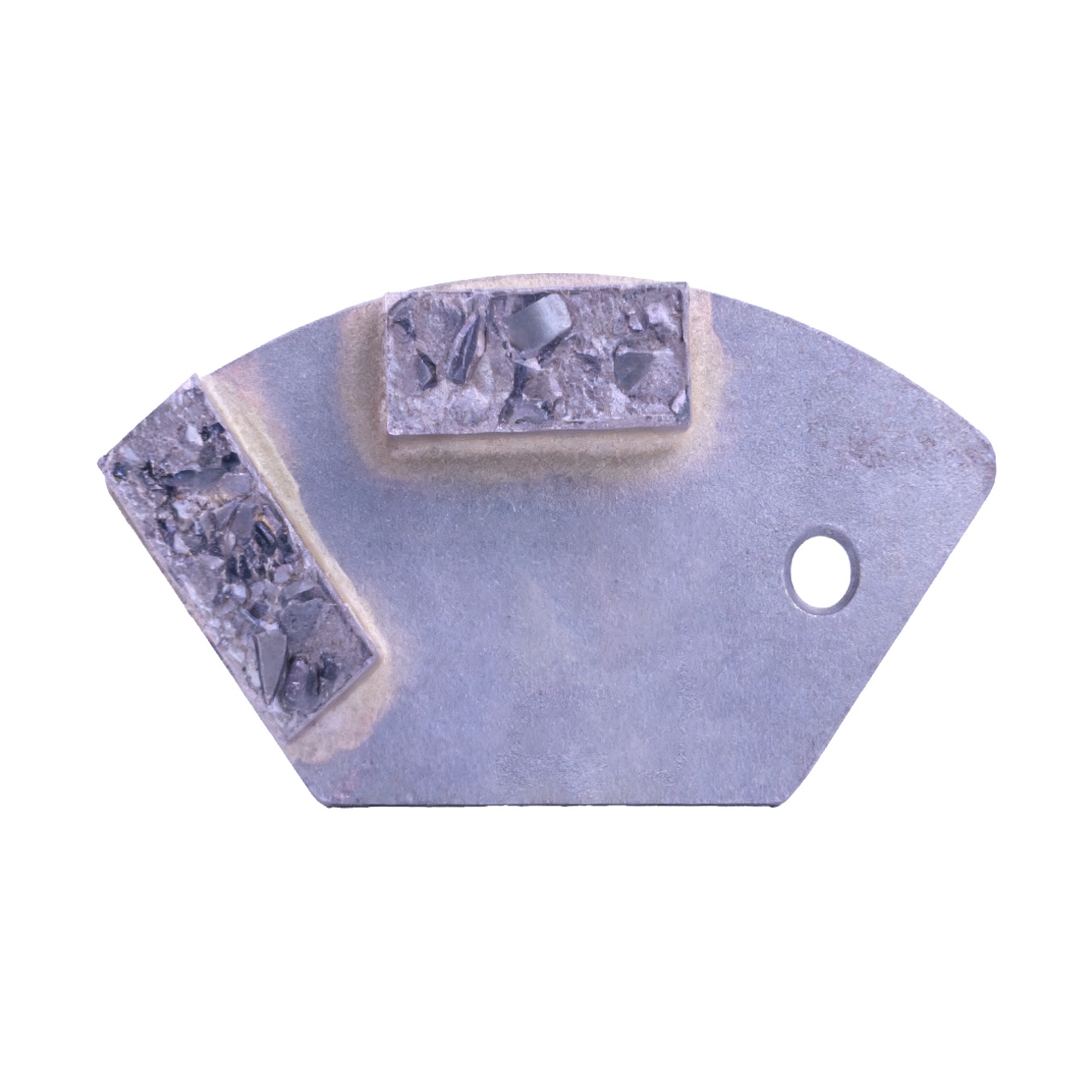
PCD Split with Double Segments for National Machine (NM-PCDSP)
- item No : NM-PCDSP
- Segment Size: 40x10x10mm
Color: White (Can be customized) - Inquiry now
Detailed description
PCD Split with Double Segments for National Machine (NM-PCDSP)
- Split PCD coating-removal tool with two bar segments per shoe — the PCD is split into multiple smaller cutting points across two parallel bars, creating a smoother and more controlled scratch pattern than full-PCD tools. Designed to scrape and rip off thinner coatings (1–3mm) including epoxy, urethane, mastic, glue, paint, VCT/carpet adhesive, and elastomeric residue. The PCD tips don't load up or smear coatings the way metal-bond diamond tools do.
- Split PCD geometry for smoother, more controlled cuts — instead of large full-round or half-round PCD segments that cut aggressively in one direction, the split design breaks the cutting surface into multiple smaller points distributed across the bar. The result: a smoother scratch pattern, less gouging of the slab underneath, and meaningfully less follow-up grinding required compared to standard PCD tools. The "double segment bars" configuration runs two parallel split-PCD bars per shoe, doubling tool life and stabilizing the cut.
- Rotation-independent — works on both clockwise and counter-clockwise grinders — unlike full-PCD tools that are direction-locked (left vs. right), the split PCD's symmetric cutting points work in either rotation direction. This is a meaningful operational advantage on planetary grinders with counter-rotating heads — one tool fits all positions instead of ordering half left, half right.
- The right tool for elastic and sticky coatings — Split PCD outperforms standard PCD when the coating is elastic, sticky, or prone to smearing — categories like carpet adhesive, softer glue residue, urethane, and partially failed epoxy. The smaller cutting points break the coating cleanly instead of stretching it; the bars between PCD points keep the cut shallow enough that the slab underneath stays intact. For thicker coatings (over 3mm), full PCD removes material faster.
- Split PCD coating-removal tool with two bar segments per shoe — the PCD is split into multiple smaller cutting points across two parallel bars, creating a smoother and more controlled scratch pattern than full-PCD tools. Designed to scrape and rip off thinner coatings (1–3mm) including epoxy, urethane, mastic, glue, paint, VCT/carpet adhesive, and elastomeric residue. The PCD tips don't load up or smear coatings the way metal-bond diamond tools do.
- Split PCD geometry for smoother, more controlled cuts — instead of large full-round or half-round PCD segments that cut aggressively in one direction, the split design breaks the cutting surface into multiple smaller points distributed across the bar. The result: a smoother scratch pattern, less gouging of the slab underneath, and meaningfully less follow-up grinding required compared to standard PCD tools. The "double segment bars" configuration runs two parallel split-PCD bars per shoe, doubling tool life and stabilizing the cut.
- Rotation-independent — works on both clockwise and counter-clockwise grinders — unlike full-PCD tools that are direction-locked (left vs. right), the split PCD's symmetric cutting points work in either rotation direction. This is a meaningful operational advantage on planetary grinders with counter-rotating heads — one tool fits all positions instead of ordering half left, half right.
- The right tool for elastic and sticky coatings — Split PCD outperforms standard PCD when the coating is elastic, sticky, or prone to smearing — categories like carpet adhesive, softer glue residue, urethane, and partially failed epoxy. The smaller cutting points break the coating cleanly instead of stretching it; the bars between PCD points keep the cut shallow enough that the slab underneath stays intact. For thicker coatings (over 3mm), full PCD removes material faster.
Related products
- About Us
- About us


CopyRight 2018 semcms Powered by semcms PHP 3.7